The landscape of American numismatics has shifted significantly this year as the United States Mint celebrates the nation’s Semiquincentennial. While the 50 State Quarters Program concluded years ago its influence remains the bedrock of modern coin collecting. In February 2026 the market is experiencing a resurgence of interest driven by the release of the 250th Anniversary quarters which has prompted many to revisit their original state collections. Collectors are finding that while most circulated coins remain at face value specific mint errors and high grade specimens have reached new levels of scarcity. This evolution from a casual hobby into a sophisticated market of certified assets highlights the enduring legacy of the program that first invited millions of Americans to look closely at their change.
Table of Contents
The impact of the 2026 Semiquincentennial on values
The arrival of the 250th anniversary has acted as a powerful catalyst for the secondary market of original state quarters. As the Mint releases new designs like the Mayflower Compact quarter collectors are seeking out the earliest 1999 issues to complete historical timelines. This renewed demand has particularly affected the price of the first five states including Delaware and Pennsylvania which are increasingly difficult to find in pristine condition. Unlike previous years where nostalgia was the primary driver current value is dictated by technical grading. Coins that have survived twenty seven years in a bank roll or mint set are now the primary targets for investors looking to capitalize on the milestone celebrations of 2026.
Understanding value concentrations in the current market
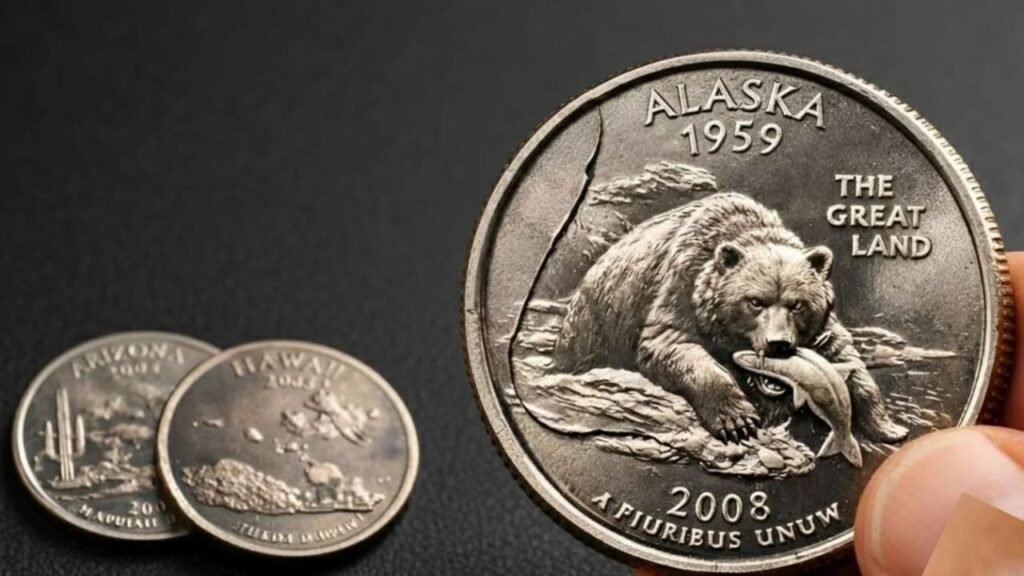
Value in the state quarter series is no longer uniform across all designs. Instead it has consolidated into three distinct tiers: high grade certified coins silver proof editions and authenticated mint errors. Silver proofs in particular have seen a price spike this year due to the rising spot price of precious metals with gold approaching $5,000 and silver showing a bullish trend. Meanwhile a common quarter found in pocket change today rarely carries a premium unless it features a dramatic striking error. The market has matured to the point where an uncertified coin is often viewed with skepticism making professional authentication the standard for any serious transaction.
Collector value guide for key state quarter categories
| Coin Category | Composition | Average Circulated Value | Certified High Grade (MS67+) |
| Standard Clad Issue | Copper-Nickel | $0.25 | $10 to $50 |
| Silver Proof Issues | 90% Silver | $15 to $20 | $50 to $250 |
| Wisconsin Extra Leaf | Copper-Nickel | $125 | $2,500+ |
| 1999 Delaware Silver | 90% Silver | $18 | $250+ |
| 2026 Semiquincentennial | Copper-Nickel | $0.25 | $5 to $15 (Early Release) |
Identifying the most sought after mint errors
The hunt for errors remains the most lucrative aspect of collecting state quarters in 2026. The 2004 Wisconsin Extra Leaf High and Extra Low varieties continue to dominate headlines with MS67 examples commanding prices as high as $2,500 at recent auctions. Other notable finds include the 1999 Pennsylvania Doubled Die and various off center strikes from the early 2000s. Collectors are utilizing high resolution digital microscopy to find these anomalies which were often overlooked in earlier decades. These errors represent a finite supply of unique items that provide a hedge against the inflation seen in more common numismatic categories.
Guidelines for preserving and grading collections
- Store coins in PVC free archival safe holders to prevent chemical toning and damage.
- Avoid cleaning any coin as this permanently lowers the numismatic value and grade.
- Focus on obtaining coins with the S mint mark which indicates a proof strike intended for collectors.
- Monitor auction results from major houses to stay updated on real time price fluctuations.
- Consider professional grading for any coin that appears to have a flawless surface under 10x magnification.
Expert insight and practical application
In the current economic climate state quarters should be viewed as a long term collectible rather than a liquid cash equivalent. For a casual collector the most practical move in 2026 is to verify the silver content of any proof sets inherited or purchased years ago as the metal value alone now provides a significant floor price. If you discover a pristine 1999 Delaware or Pennsylvania quarter in an old jar the cost of grading is approximately $30 to $50. Unless the coin is a confirmed error or a near perfect MS68 specimen the grading fee may exceed the coins market value. Therefore the best strategy today is to curate a set based on historical interest and only invest in professional certification for the top one percent of survivors.