Improving daily flexibility through gentle yoga is a sustainable way to combat the physical strain of modern life. The prevalence of sedentary work environments has led to a significant increase in reports of chronic muscle tightness and joint restriction. Unlike aggressive athletic training, low-impact restorative movement focuses on the gradual release of the fascia and the lengthening of muscle fibers through deep, controlled breathing. By prioritizing consistency over intensity, individuals can effectively reset their nervous systems and restore the natural range of motion that is often lost to hours of desk-bound activity.
Table of Contents
The Science of Passive Stretching and Muscle Recovery
Gentle movement works by engaging the parasympathetic nervous system, which signals the muscles to stop guarding and start relaxing. When the body is under stress, muscles often remain in a state of semi-contraction, leading to the sensation of stiffness. Passive stretching allows the spindle fibers within the muscles to acclimate to a new length without triggering the stretch reflex, which is the body’s natural defense against sudden tearing. This neurological approach to movement ensures that the increased mobility gained is both safe and long-lasting.
Addressing Common Physiological Problem Areas
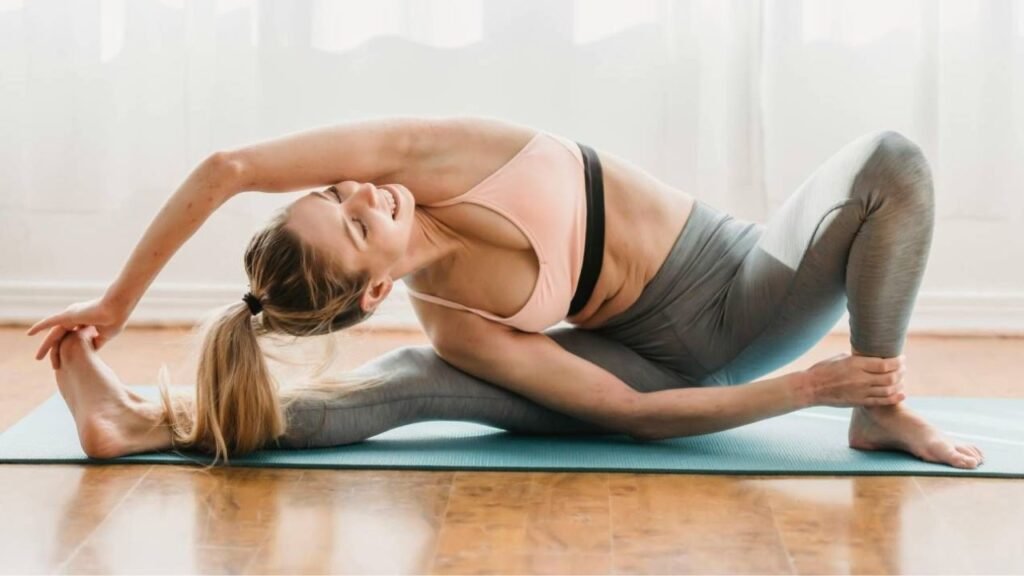
Most physical tension accumulates in specific high-stress zones: the cervical spine, the lumbar region, and the iliopsoas group. Stiffness in the neck and shoulders is frequently a result of forward-head posture, while lower back pain is often secondary to tight hip flexors. A comprehensive routine must address these connections to be effective. For instance, lengthening the hamstrings often provides more relief for back pain than stretching the back itself, as it reduces the posterior pull on the pelvis.
| Movement Category | Primary Physiological Benefit | Focus Area |
| Spinal Extension | Decompresses vertebrae and improves disc hydration | Lower and Mid Back |
| Hip Flexion | Neutralizes the effects of prolonged sitting | Pelvis and Groin |
| Lateral Stretching | Expands the ribcage and improves respiratory volume | Side Body and Obliques |
| Inversion (Mild) | Facilitates lymphatic drainage and reduces leg swelling | Circulatory System |
| Rotation | Massages internal organs and restores spinal torque | Core and Torso |
Integrating Mindfulness with Physical Alignment
The effectiveness of restorative movement is doubled when paired with intentional breathwork. Deep diaphragmatic breathing increases oxygen saturation in the blood, which is essential for cellular repair in the muscle tissues. Every inhalation should be seen as an opportunity to create space within the joints, while every exhalation serves as a release of held tension. Proper alignment is also crucial; utilizing props such as cushions or folded blankets can help maintain the integrity of a pose without causing strain on the ligaments.
Expert Insight: Practical Application for Professionals
From a clinical perspective, the most effective way to utilize these techniques is through the implementation of movement breaks every ninety minutes. You do not need a full hour on a mat to see results. A practical application for the modern professional is the “micro-stretch” method: performing a seated twist or a standing side extension for sixty seconds between deep-work sessions. This prevents the fascia from “setting” in a restricted position and maintains blood flow to the brain, which enhances both physical comfort and cognitive clarity throughout the workday.
Key Strategies for Lasting Mobility
- Prioritize a ten-minute daily session over a single long weekly practice.
- Never push into a range of motion that causes sharp or radiating pain.
- Use gravity rather than muscular force to deepen a stretch.
- Ensure your environment is warm, as cold muscles are more prone to restriction.
- Focus on the transition between movements to maintain a state of flow and relaxation.